 In case you were hibernating or out of range of cell cover or WiFi during the last few days, you know that Amazon has made an offer to acquire Whole Foods.
This places the largest online merchant in direct competition with some of the largest retailers in the US – grocery stores – and continues Amazon’s move into “bricks and mortar” businesses.
On this blog Paul and I have been writing about the importance of innovation in platforms and ecosystems.
With this acquisition, Amazon is attempting to extend its platforms into the “real” world and link up its power in the online world with physical stores. Amazon understand a lot about attracting customers to its site, and does a reasonably good job at distribution. Amazon gains a trusted “bricks and mortar” company that is respected (or sneered at) by consumers. Whole Foods isn’t nicknamed “Whole Paycheck” for nothing, and there are some interesting dynamics between a company that isn’t concerned with profits and a company well-known for top of the line products and good customer service. But we aren’t here to evaluate the integration of these companies, as much as to identify an ecosystem gap.
Amazon and the last mile problem


 Our experiences determine to a large degree, success or failure. When you are reliant on others to collaborate and exchange knowledge, for the better good, you need to make sure there is a consistent validation process.
 Jeffrey wrote a recent post “
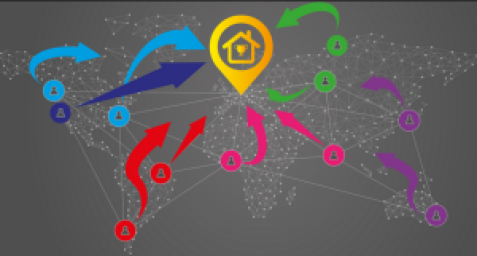 There is a new set of battlegrounds brewing around platforms and ecosystems and what and who controls the data and the flows needed to build these thriving environments, reliant on the cloud.
 So what is the difference between a fog and a cloud? Well, actually bandwidth is part of the answer and where data needs to be situated.
 In the last post Paul wrote about
 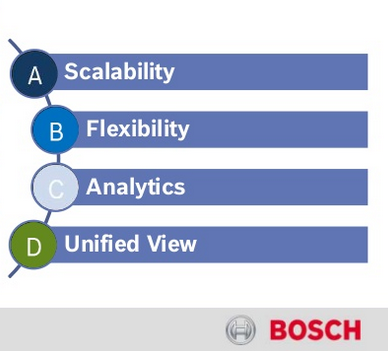 Bosch takes connected devices, open platforms, and interoperability for IoT solutions to drive your business, built from their own deployed experiences. They are focusing on knowledgeable development & deployment to provide a single integrated set of ‘connecting’ solutions.
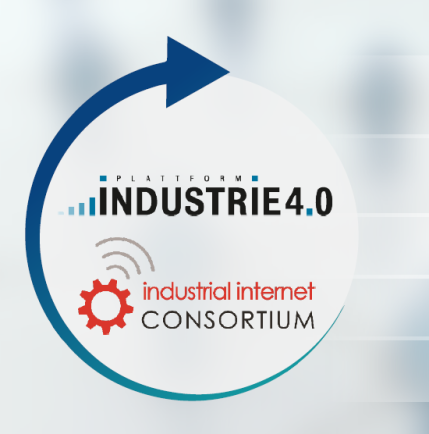 We are all moving from the simple digitalization (3rd Industrial Revolution) to innovations based on multiple combinations of technologies, ushering in increasingly the 4th Industrial Revolution.