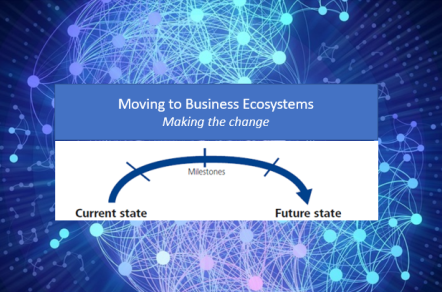
 Business is far from usual, it is transforming in front of our eyes. A business has to simply accept this is a changing world and business ecosystems are coming of age, perhaps adding more complexity but also to help bridge this transformation. The traditional silo mentality, the belief that your industry boundaries are immune to change and new challenges, is a grave mistake.
There is, or should be, a recognition that all businesses should find opportunities to coalesce into networked ecosystems. They need to open up to a far greater potential than is presently on offer to each individual entity, unless you have deep pockets (Apple), as well as so many app developers lining up to be part of their ecosystem, or patient shareholders (Amazon) continuing seeing growth but limited profit return, or inflows of revenue (Google), where you can invest in new, potentially huge but speculative, technology-related business concepts.
Ecosystems can offer so much connecting value out there to ‘form’ around.
We are witnessing a very radical change, driven by technology, increasingly disrupting and breaking down past traditional boundaries, partly built to defend positions so as to achieve economic scale. There is a new economic logic to build even greater scale, it involves greater complexity, yet its value proposition is to strive towards offer greater customer experience and satisfaction, where the solutions are valued highly in social and economic value. Ones that get closer to their connected expectations and daily needs for solutions to solve, in far better ways, than that are presently offered. Innovative design has become paramount to these new offerings.
The market dynamics are also changing. Those businesses with a different mindset of global trade and value proposition building will benefit. Risk is taking on different forms to capitalize on these changes. Today we can all be liberated through the exploitation of technology and new radical innovation design. In some ways, it has become a new ‘land grab’ panning for digital gold. We are at the point of building a new frontier that is calling for business change.
As we think through the impacts of the changes we need to reflect on some of its parts. Some of these are outlined here:
Read more
 I was not aware until recently that there are well over 450 providers of Platforms, all offering solutions, presently giving a very fragmenting market. Collaborators be aware!
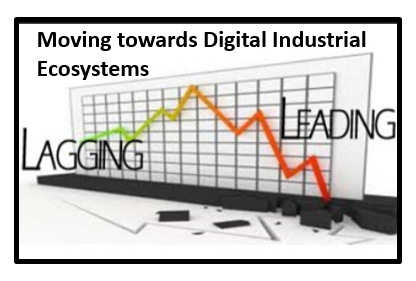 The platform has become essential for much of our social and direct engagements. The likes of Facebook, Amazon, Airbnb and many others are transforming much of our digital engagement for our social and private needs.
 There seem to be multiple forces at work, ones that are reshaping how organizations are adjusting to a rapidly changing world, to operate within.
 We are told that the company with the most data will win. To get the real edge it is to have and train algorithms that interpret the intelligence and here you need to understand the value of AI (Artificial Intelligence).
 I have put some focus back on the platforms recently, as this is becoming a real imperative to understand the whole meaning and implications of platforms, with the necessary management they require, so as to enable us to rethink different business models for the future.
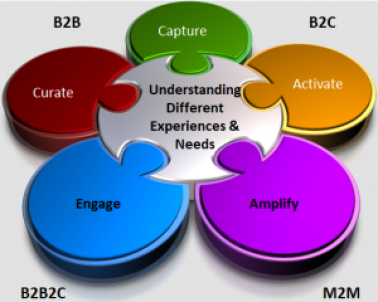 There are significant differences between the ecosystems we might consider. Let’s reflect a little here, some recap and explore some further thoughts.

 It had to come to this eventually. The emergence of Blockchain and distributed ledger systems illustrates how innovation is moving from focus on products and services, which are interesting but don’t provide a long-lasting competitive advantage, to a focus on platforms and ecosystems.