 The broad use of ‘open’ does seem to have very different interpretations, especially when it comes to platforms or cloud-ready architecture.
Two examples for me in my research recently, needed some “airing” as the openness (excuse the pun) gives me a higher level of comfort. I wish others would state what openness really means in their offerings.
The two I have been drawn to are Aras and their open architecture platform for PLM and the other is Bosch with their IoT platform.
Let me take quotes from both to underpin that real clarity I believe the client would want before they go into a partnership. Today so much is banded about upon “lock-in” when you commit to platforms, it sort of scares of many potential clients wanting to have platform solutions, from making that investment. Trust and confidence in what you are actually signing up for, is needed to be fully transparent. Goes to say but is it?
In my view only having one platform provider is not the right path, it is a range of providers, selected because they can cater to your jobs and needs, not you having to fit into their architecture but it is this openness that significantly needs to be looked at closely.

 Technology is radically altering our need for innovation. We see increasingly innovation is feeding off the “digital response rate” and how we build and design the application software will transform IIoT as it has for our personal world (B2C), where we download apps on a daily basis to solve a problem or to improve our understanding.
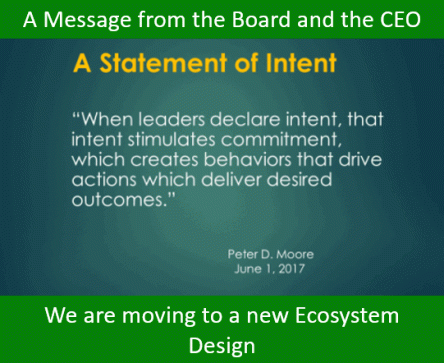 Ecosystems have become a really hot topic. As we gain the understanding of what a dual strategy approach to what our business could look like, you need to recognize what you still need control of, those you call your core assets. Yet at the same time, to explore and expand out more today we need to build better external collaborative approaches.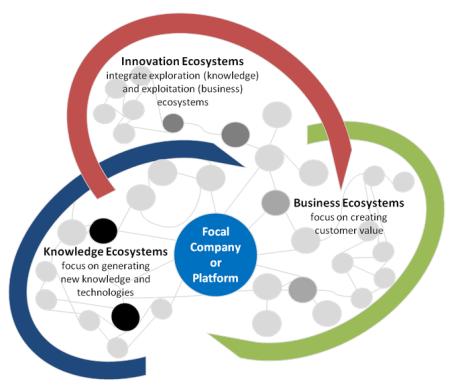
 Paul and I have been writing mostly about ecosystems and platforms in the abstract to date, not spending a lot of time talking about specific companies or industries.
 If ever there is one company in my mind that is at the forefront of building ecosystems, platforms and customer engagement, that is the
 Today business organizations are in need to put in place the building blocks for managing ecosystem designs.