 Whenever I seem to read about Platforms and Ecosystems, it mostly seems to relate to technology-led organizations and how they continue to connect us all up in our private lives.
As leading examples of the disruption that occurs and the connected value, we get offered the likes of Uber, Facebook, Apple, etc., all bringing new value to transform our world.
Yet, for me, the area that is shifting dramatically is where Industrial organizations are providing platform solutions to solve industrial problems. Good examples are Bosch, Siemens, GE and Schneider Electrics.
They transform their solutions and clients businesses by offering digital on top of the existing products in some awe-inspiring ways. They focus on connecting up their solutions into their client network on platforms to build the industrial internet.
The building of these platforms has prioritised specific industries to master and progressively transform their business into a digitally connected one. This seems to me to be so much harder than those like Facebook, Google or Uber.
Industrial solutions have had to deal with legacy “big time,” overcome entrenched positions or views and begin to collaborate in highly sophisticated ways, with often very demanding and sometimes sceptical clients.
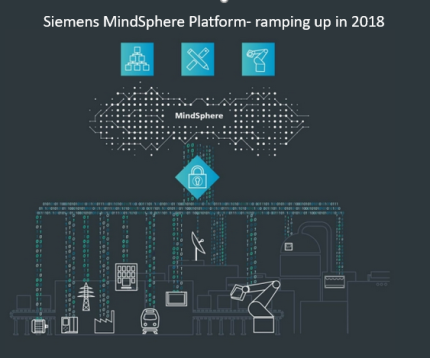 The move towards open-cloud based IoT operating systems has been significant in the past few years or so. Most major industrial companies have set about building and offering to their clients their platforms, for more open design and engineering, automation and operational work, as well as increased emphasis on maintenance and utilization.
 I was not aware until recently that there are well over 450 providers of Platforms, all offering solutions, presently giving a very fragmenting market. Collaborators be aware!
 The platform has become essential for much of our social and direct engagements. The likes of Facebook, Amazon, Airbnb and many others are transforming much of our digital engagement for our social and private needs.
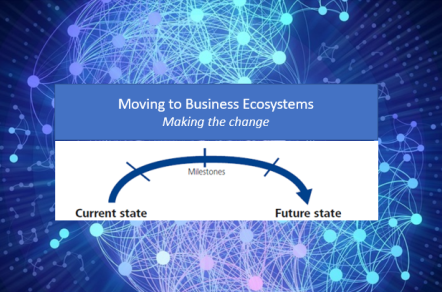 Business is far from usual, it is transforming in front of our eyes. A business has to simply accept this is a changing world and business ecosystems are coming of age, perhaps adding more complexity but also to help bridge this transformation. The traditional silo mentality, the belief that your industry boundaries are immune to change and new challenges, is a grave mistake.
 I see the growing importance of ecosystems and platforms for those that want a thriving future, these are the ones that simply “get this” need to connect into a wider ecosystem to build better value and solutions that customers want. The business imperative of today and near-term future is designing around ecosystems that seek out collaborative platform solutions.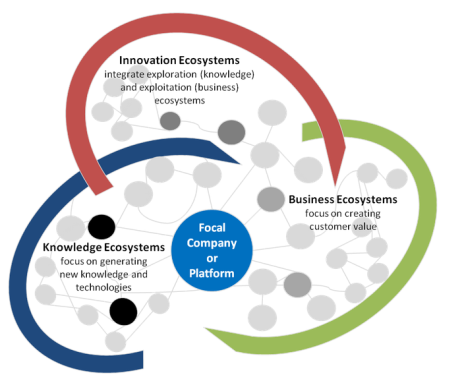
 There seem to be multiple forces at work, ones that are reshaping how organizations are adjusting to a rapidly changing world, to operate within.
 We are told that the company with the most data will win. To get the real edge it is to have and train algorithms that interpret the intelligence and here you need to understand the value of AI (Artificial Intelligence).
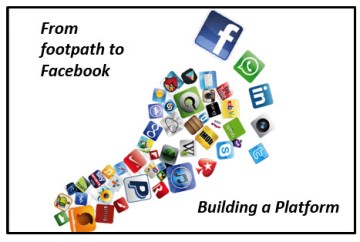 I’ve been interested in what constitutes a “platform” and how platforms spawn and nurture ecosystems for quite some time. We’ve been exploring these ideas in this blog over the last few months.