Today business organizations are in need to put in place the building blocks for managing ecosystem designs.
These building blocks are offering the potential of new pathways to a greater ‘connected’ innovation, expected today, one that gives increased value to the consumer.
Yet the understanding of what this means in commitment and structuring has some clear implications behind this.
Managing ecosystem arrangements I feel requires a far greater understanding of the potential design, so you can achieve a more robust, open, dynamic and highly collaborative environment.
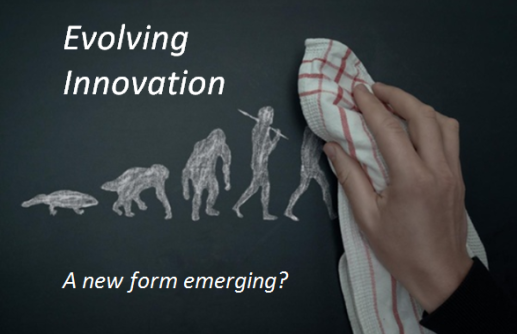
Paul and I have been exploring the interrelationships between innovation, ecosystems and platforms for a few weeks now.
Hopefully we’ve made the point that innovators must expand their horizons, because increasingly customers don’t want or need stand alone, discrete products as much as they want integrated, seamless, holistic solutions.
In fact I think we can easily predict that moderately interesting new innovations that integrate with existing ecosystems and platforms dominate disruptive new products that ignore ecosystems and platforms.
Why? Customers don’t want to give up all that they have invested in the totality of their use of a solution or the experience when using the solution. Even if the disruptive product or service delivers outsized benefits, if it causes the rest of the customers’ experience to suffer or degrade, many will choose to remain on a more integrated solution.
Today we have to “think China” when it comes to looking for the dynamism within Ecosystems and Platforms, they are leading, exploring and extending the thinking beyond our more limited ambitions in the West.
It is the environmental conditions coming together or being explored and exploited that make China stand out in its dynamism in this area.
It is that combination effect of the Government building, laying in ‘accepted’ guidelines and encouraging the infrastructure, it is the business entrepreneur and the social conditions that are enabling so much.
Dynamism is the quality of being characterized by vigorous activity and progress. It projects an energy, force, power and vigor and a strong desire to make something happen. It is the manifestation of these forces (conditions) that is constantly pushing the boundaries of our understanding of what is possible in the ecosystem and platform approach. The Chinese have found ways to experiment, develop and constantly create a real motion within the system.
We are moving rapidly from the industrial economy, reliant on single companies simply producing specific products they believe consumers needed or simply accepted.
This approach is often giving consumers no or limited choice and this supply-side approach is about to change into one that is driven by a digital economy where all sides of the value equation are connecting. One where consumers have a greater ‘voice’ over their choice that manufacturers will need to listen to and respond accordingly.
This connected world is driving transformation inside every industry, pushing for innovation dynamism as knowledge exchanges are accelerating.
There becomes this increasing business “commons” of connecting, communicating, seeking manufacturers to collaborate far more closely, across new technology and infrastructures, that allow for a greater ‘economic diffusion’ than ever before.
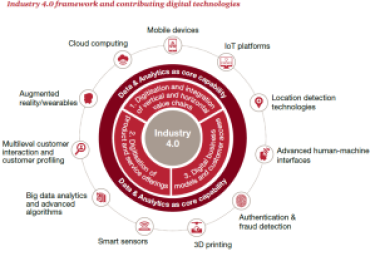
Industry 4.0 is driving much of this change within industries and emerging are some powerful industrial digital ecosystems such as GE are driving to achieve, to transform their business.
There is a dramatic shift in recognizing where our future assets lie. In the past, it was heavily invested in physical ownership, the knowledge was kept within organizations and this ‘became the competitive advantage. Today that is rapidly disappearing, the knowledge is recognized to lay mostly outside the organization, it is the ‘connected minds’ across multiple stakeholders, that participate through and across new platforms and ecosystems and how these are leveraged and managed is where are looking to gain any new competitive advantage.
In our previous posts, we’ve asserted that the reason so many “innovative” new products and services fail is because the innovators fail to understand the circumstances, ecosystems and environments in which the new product must exist. Even more important to consumers than new features is ease of use, ease of integration, ease of connection. We call this a holistic, continuous seamless experience.
If seamless experience, as we’ve defined it in previous posts, is the emerging requirement for innovators, then what are the components that construct a seamless experience? And further, if seamless experiences are so vital, what are the forces that converge to create so much interest in seamless experiences?
If we consider and answer these questions, innovators can see a growing confluence of ecosystems, platforms and patterns of disruption that are combining to create new opportunities. We can also take a look back at past innovation efforts to see how little we’ve moved the needle in terms of customer engagement and the value that past innovations have created.
With so much in motion, it’s time for a careful consideration of what fuels innovation, what patterns exist and what factors – such as ecosystems and platforms – will combine to create what customers really want: a continuous, holistic and complete experience.
We need to discover the new innovation pursuit; connecting, coherent and collaborative for customers to be provided seamless experiences
The pursuit of the ‘holy grail’ of business – is offering coherent, connected customer-facing solutions – will increasingly only be achieved through a combination effect of broader collaboration, working in ecosystems arrangements and coordinated through a platform design.
It is through this ‘combination effect’ there is further potential to deliver innovation that solves existing need or uncovers unmet ones that advance on the existing solutions in unexpected ways. Ones that can improve productivity, efficiency, and effectiveness, taking the complexity out of our existing lives, giving us new experiences we connect into and highly value for what they provide and solve. (think Apple, Social Networks, Amazon, Uber or AirBnB)
The whole combination of crowds, customers, collaborators, competition, and co-creators can define and reshape complete offerings that are often unthinkable when you are operating in individual ways, so the potential to achieve a different scale, access, and engagement can be made. In our view
Innovation ecosystems can radically alter the value proposition.
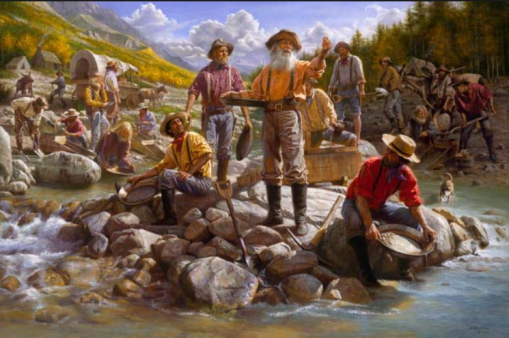
Platforms presently are the new gold rush we in business need to exploit today. They are becoming an essential part in our needs to shift to the new creation of connected value.
What is absolutely necessary, is the need to stake out where you believe are your best prospecting chances and for that you need to have a clear vision and plan, as you think through any shift into platform management.
It is a significant transforming decision, full of risk but equally full of real promise.
Different forms of platforms have been around for years, even centuries, where people came together, traded in goods and knowledge. The significant transformation taking place around exploiting technology and digital management has made ecosystems and platforms a mainstream prospecting need in most of our businesses today.
Throughout our blog posts about innovation, ecosystems and platforms, we’ve maintained one core theme: incremental, discrete product innovation will not create significant new revenues or disrupt markets.
The reasons, as we’ve discussed, include the growing expectation of seamless experiences from the consumers’ viewpoint and the rising importance of platforms and ecosystems in which new products or services exist.
Minimum Viable Footprint
Today I’d like to highlight a new idea – innovating for the “Minimum Viable Footprint”, an idea that was first proposed in Ron Adner’s book entitled The Wide Lens. Adner defines the “Minimum Viable Footprint” or MVF as “the smallest configuration of elements that can be brought together and still create unique commercial value“. The MVF is the logical outcome of two realities: first, the already discussed idea that innovators need to innovate more than just a product, but must consider the ecosystem in which the product will reside, and second, the concept of a minimum viable product – something many companies already understand and practice.
All around us, we are faced with new challenges. One of those is a profound shift taking place relating to innovation. Increasingly we are seeing a growing dissatisfaction on the impact that innovation is having; in growth, in returns, in market and customer impact.
One of the implications is this growing recognition that innovation is rarely succeeding in isolation but is growing on a more highly dependent type of complementary innovation. This will have a significant impact on organizations innovation management design and approach.
Innovation ecosystems are being established that fundamentally are challenging the way we are managing currently and in the future our innovation activities, setting about our innovating of “doing things” in very radically different and more connected ways.
These are threatening to dismantle the way innovation is being managed today, and due to this, we require a radical adjustment in our approaches to achieve a far more collaborative one built on innovation ecosystem thinking.
So what is this change occurring for us to consider the value of Innovation Ecosystems? Making the case.
Through our discussions about innovation, ecosystems and seamless experiences we’ve highlighted the fact that 1) innovation doesn’t work that well for many companies because we believe that 2) these companies create discrete products rather than fully understanding the ecosystem the products enter and 3) they don’t understand that customers are seeking seamless experiences more than ever.
 Today business organizations are in need to put in place the building blocks for managing ecosystem designs.
 Paul and I have been exploring the interrelationships between innovation, ecosystems and platforms for a few weeks now.


 Platforms presently are the new gold rush we in business need to exploit today. They are becoming an essential part in our needs to shift to the new creation of connected value.
 Throughout our blog posts about innovation, ecosystems and platforms, we’ve maintained one core theme: incremental, discrete product innovation will not create significant new revenues or disrupt markets.
 Through our discussions about innovation, ecosystems and seamless experiences we’ve highlighted the fact that 1)