 Do you know your platform solution?
Knowing your digital solutions is key to choose industrial platforms, as they might not meet your exact needs
What is under the hood of an Industrial Platform solution? What do you look for?
IIoT Platforms are still under significant construction
How do you judge the platforms that are out there?
Companies have this essential need to build an IoT platform today, or be at least very active partner in one, or even many, to fit their business goals. A platform connects, it connects your world with the rest of the world. Often when we talk about IIoT, it can get easily confused with IoT. Actually, IIoT, grew out of the other, IOT.
IoT is mostly about making the human interaction with the object(ives). IIoT is about connecting devices, sensors, building and improving manufacturing execution systems then applying intelligence and analytics to understand or improve the performance of the existing devices. The aim is to monitor, build parameters, sophisticated controls and search for solutions that will lessen the downtime and improve the productivity of the asset.
McKinsey estimates that the Industrial Internet of Things will create $7.5T in added-value by 2025. IIoT has been valued at around $255b as a market in 2025 (a past GE estimate). These two seem to offer very different estimates. In many ways, we are all confused and still guessing or predicting, because of so much uncertainty and not honestly knowing what comes next in technology invention that changes the position. We have learned, in our engagement and growing reliance just on the smartphone.
We have all learned to adapt and adopt so differently, as we connect more and more. In the IIoT world, there is predicted value across all of the connections (McKinsey view) and as we see more solutions emerging, as ways to serve that “connected” need market growth will more than likely simply accelerate away. Speed, scale, scope are all accelerating away, and as companies, we need to find our positioning in this evolution and industrial internet. The 4th Industrial revolution is well-under way.
Let me provide a snapshot, my view, of where IIoT platforms-as-a-service sit today.
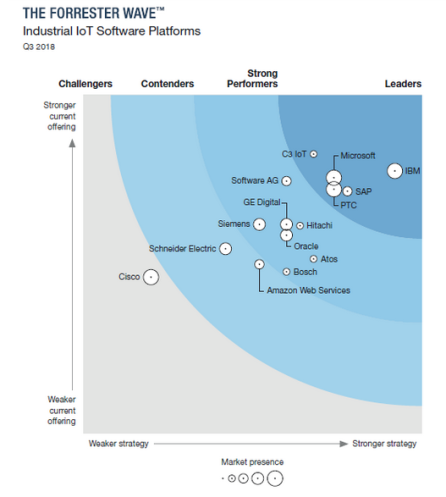 I feel 2019 will be a make or break year for the platform providers for IIoT solutions. We are getting a real sense of clarity on who is leading the pack, who is struggling to keep up and some becoming real laggards, that need to change their game dramatically to stay in the platform hunt.
 Software stacks. This conquers up a certain mystery for me, so I decided to order up a plate to see if I can digest all they seem to be offering.
 Ecosystems in our business thinking have suddenly become of age, they can enable cross-cutting innovation to be delivered in highly collaborative and dynamic ways. Understanding the value of working within an ecosystem is becoming critical to understand.
 There are twin forces at work, feeding off each other and innovation can become the greater unifier. We are facing greater disruption and an increasing innovation and technology pace. These are constantly combining, relentlessly adding a new shape to our future. We are actually caught up in a very revolutionary period.
 The broad use of ‘open’ does seem to have very different interpretations, especially when it comes to platforms or cloud-ready architecture.
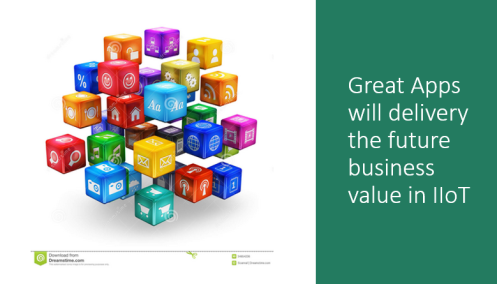 Technology is radically altering our need for innovation. We see increasingly innovation is feeding off the “digital response rate” and how we build and design the application software will transform IIoT as it has for our personal world (B2C), where we download apps on a daily basis to solve a problem or to improve our understanding.
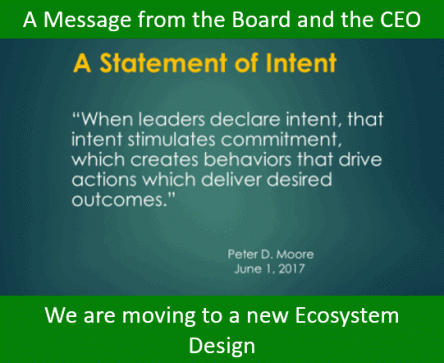 Ecosystems have become a really hot topic. As we gain the understanding of what a dual strategy approach to what our business could look like, you need to recognize what you still need control of, those you call your core assets. Yet at the same time, to explore and expand out more today we need to build better external collaborative approaches.
 You certainly have to make choices in life in where you focus your energy, otherwise, it gets way to complicated. For me to learn about Ecosystems and Platforms I have chosen a “select” group of IIoT players or advisors in their field to concentrate upon. Increasingly the insights and leading knowledge seems to be less coming out of the Big Consulting firms but more from those actually operating in the Industrial world (IIoT players).