
Much of business today is caught up in managing short-term change that is growing in complexity and challenges across the business world globally. There is growing leadership and employee fatigue in managing rolling crises and not being able to adequately focus on the longer term, have that space to renew and in enough time as ideally liked. Disruption has been a constant at all organisational levels to adapt and adjust to worldwide events totally out of that organization’s control.
Following the pandemic, it has been hard to regain consistency due to staffing discontinuities and displacements, sourcing of raw materials, especially from China, their intermittency in availability and the general disruption of world trade. The war in Ukraine has only added more short-term crises in switching fuels, sourcing difficulties, changing supply chain dynamics, and generally readjusting the business operations in Ukraine and Russia to highly constrained operations or the loss/withdrawal need required by sanctions.
So the challenges in the past year have been highly focused on supply chain disruptions, plugging gaps in technology solutions that can provide solutions that can offer higher flexible, agile and advanced planning and production environments. The continued needs to keep moving towards securing a more sustainable future that reflects the need to become carbon neutral; net zero has needed a far more agile and adaptive approach.
As well as encourages thinking that is building a more robust circular economy to offset the immediate shortages but builds out a waste reduction mentality and recycling approach.
Yet disruption is increasing; we are in a volatile world of constant change.
Continue reading So, what is the future for humanity, and where does technology with a purpose fit? Can we envision a new era of sustainability powered by IoT?
 I recently listened to a great topic from a panel of experts that certainly opens all our thinking to all the possibilities ahead of us in the Industrial IoT world.
 We are currently locked into a ‘battle of ecosystems.’ where our very existence is requiring one side to win, it simply must, to be more dominant.
 Sadly, yesterday, 4th November 2019, the United States began the process of withdrawing from the Paris Agreement, notifying the UN of its intention to leave.

 We all facing this growing pressure of time. In our daily work, in managing product and service life-cycles, as well as constantly considering business model overhauls as they become ever more connected.
 You cannot escape the discussions around platform business models. Recently I saw that 50% of all organizations are either investing or considering a new platform business model. In a report provided by the IBM Institute for Business Value, released last year called “
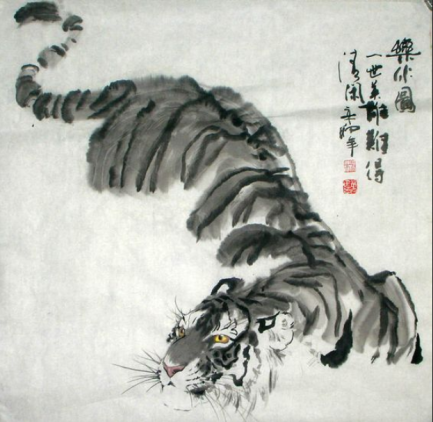 I was trying to capture the Asian dynamism in how they go about Ecosystem designs for their businesses.